Video

Engineering a simulation for a 5 MWh zero-emission yacht

By Foundation⁰
Published
2026.06.05
Disclaimer

When you eschew fossil fuels, you become open to all other types of energy — especially ones that yacht designers historically don’t utilise.

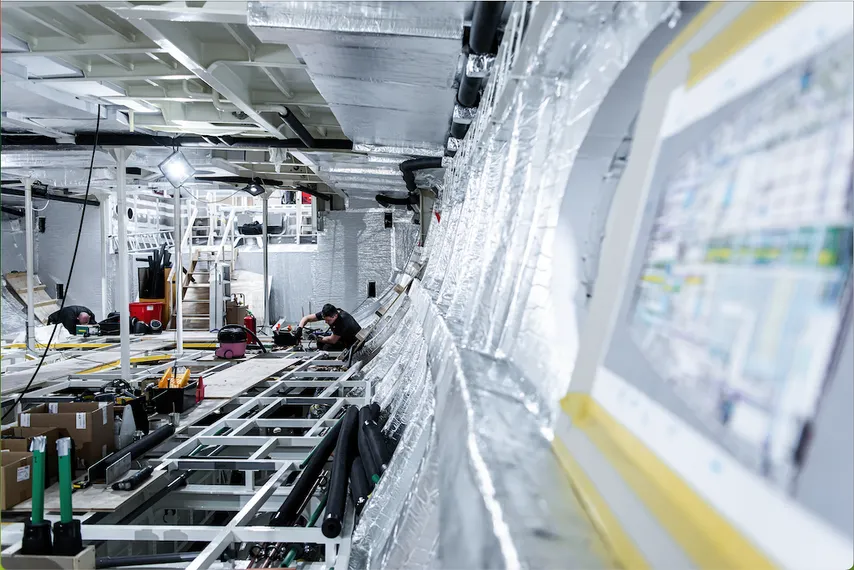
This is how sailing yacht Zero used a digital twin to fully embrace thermal energy.

Firstly, around 50 % of a yacht’s energy usage goes towards HVAC when at anchor, and the team wanted to find ways to reduce this. So, on sailing yacht Zero, the goal is to use a heat-fired chiller to reduce reliance on HVAC.

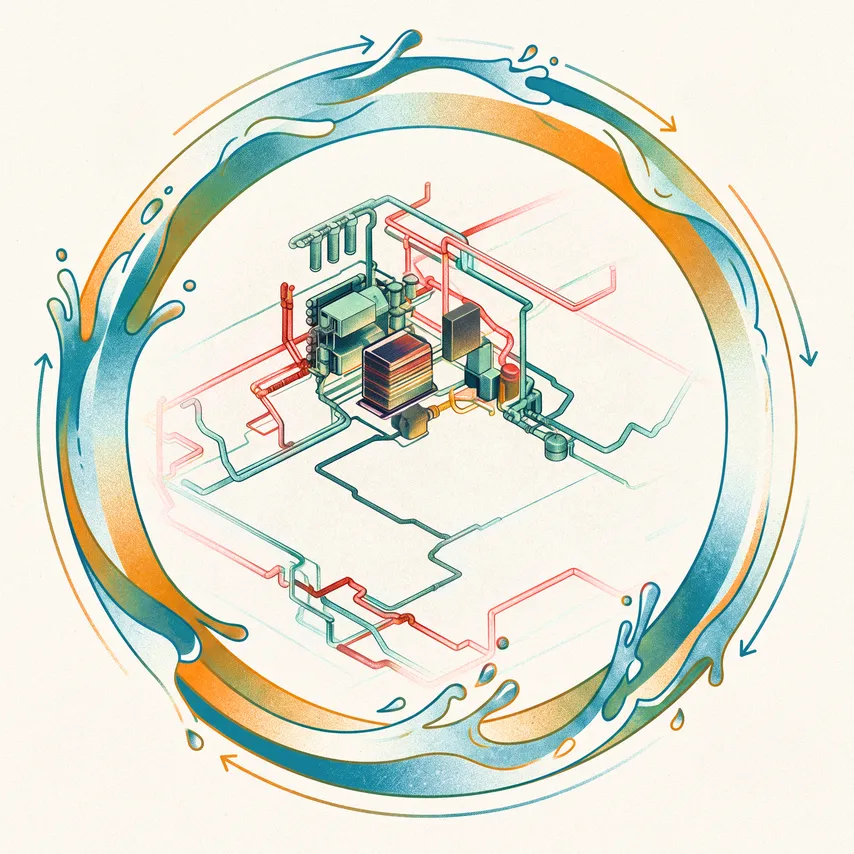
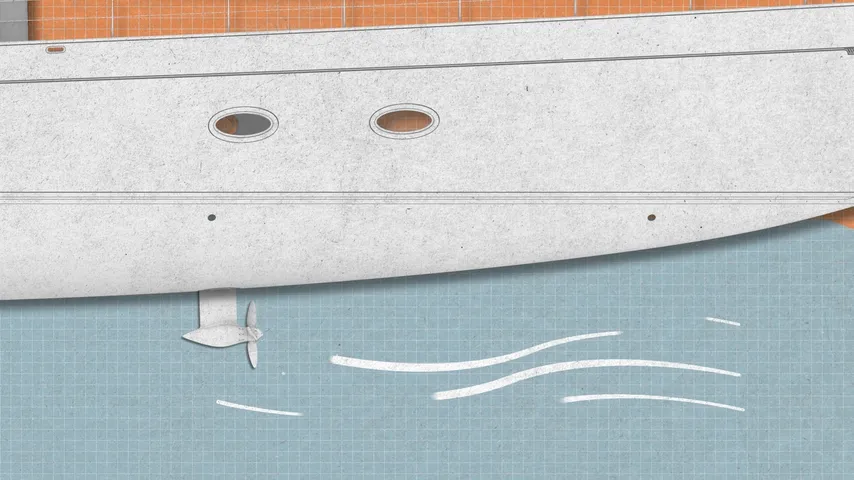
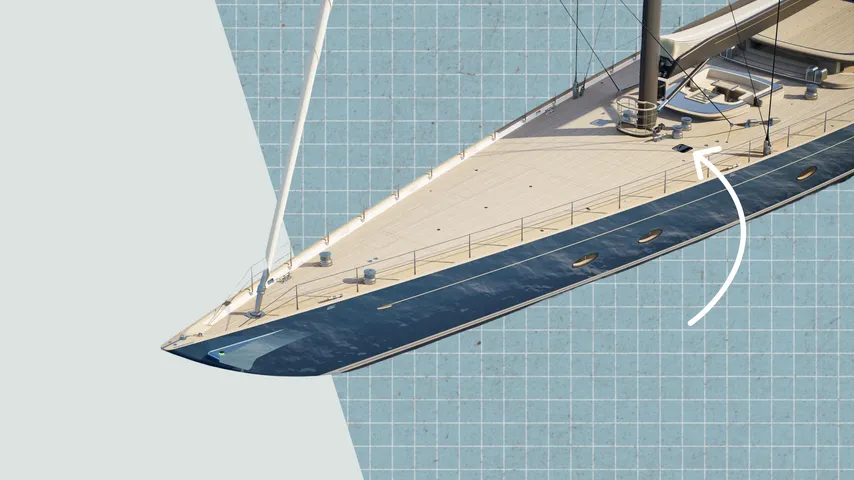
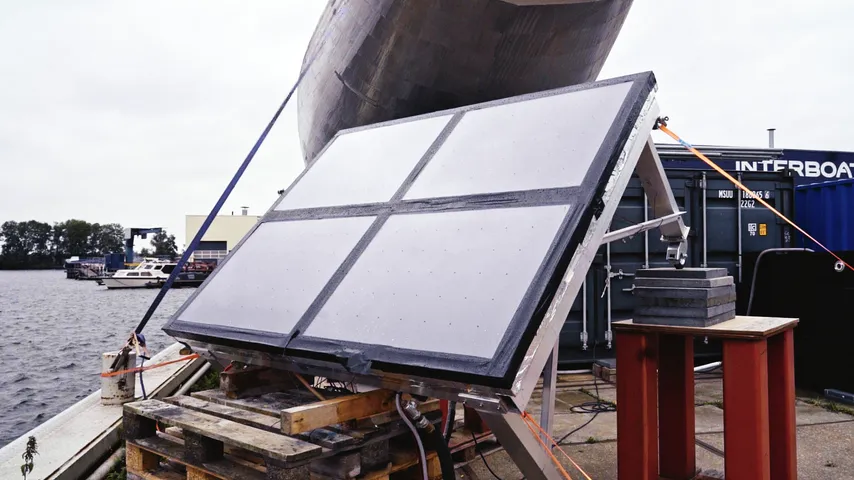
This is done by recovering waste heat from the power converters and the thrusters (which produce 4.3 kW forward and 9 kW aft) and the PVT panels. This is stored in phase-change materials and is also used to drive the heat-fired chiller.

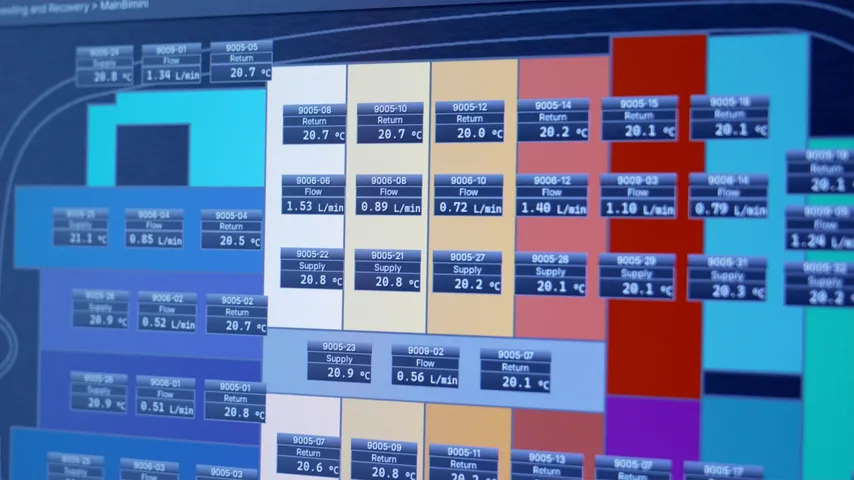
The question, of course, is how do you make sure this works? For that, the team looked to build a real-time capable digital twin using the Modelica Standard and XRG HVAC libraries.

After all, you don’t want to risk damage to such a high-stakes project. Nor do you want to run into any blockers on the way. This is why you must test heavily before building.

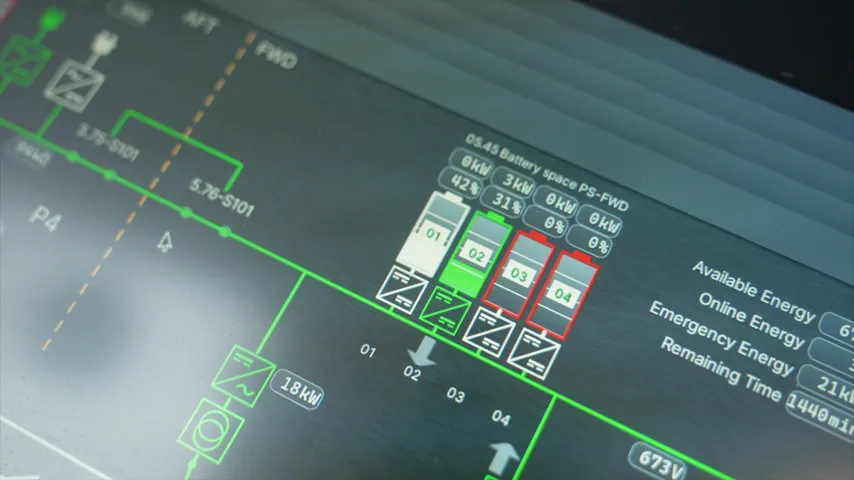
Therefore, the team modelled critical components and created a model of the yacht's thermal system. This allowed them to map and test low-level control loops, automated valve switching, and safety cooling modes entirely in a virtual environment. With the idea being that the higher level intelligence can then build on top of all that and still be testable.

Bridging the gap wasn’t without its hurdles; however, through rigorous and automated testing they ensured no broken logic entered the system.

With the high-temperature systems successfully simulated, the next step comes in testing it out in real-world conditions. Best of all, the entire project is open-source, meaning the entire maritime industry can benefit from these learnings.

For more information, watch the full presentation below from Boudewijn van Groos:
Read our latest news, articles and insights today
2026.06.25|Video
Why the future of fresh water is in the deep sea
2026.06.09|Feature
A groundbreaking test set-up for a groundbreaking regeneration system
2026.05.21|Video
A new approach to marine ventilation
2026.05.13|Feature
Clippership’s sailing ‘robotaxis’ could make ocean freight more sustainable
2026.05.07|Video
What is the vision of Foundation⁰?
2026.04.24|Video
Powering the electric yacht of the future
2026.03.30|Video
How AI may enable autonomous yachting
2026.03.25|Feature
Using optical fibres to measure mast shape in real time
2026.03.13|Video
Sailing towards renewability: Real-time edge computing at sea
2026.03.06|Video
The story behind a cutting-edge regeneration and propulsion system
2026.02.26|Video
The road to an ocean-proof microgrid
2026.02.24|Research
Using digital twins to develop system control logic
2026.02.12|Video
Reinventing marine glazing with Royal-Maritiem
2026.01.29|Video
How these experimental PVT panels will harvest heat at sea
2026.01.14|Feature
Saving energy with a cutting-edge cooker ventilation system
2026.01.06|Video
Carbo-Link and the “breathing” mast
2025.12.03|Feature
Coding Zero: The role of software in next-gen yachts
2025.10.14|Feature
High Tech Telltales
2025.08.28|Feature
A smoother future for Antifouling coatings
2025.07.16|Feature
Protecting electric yachts from lightning strikes
2025.04.24|Feature
Using masts to reduce energy expenditure in the maritime industry
2025.04.17|Video
Can solar panels work when partially shaded? Expert Video
2025.01.09|Research
Sail team BCN Impact & Sustainability Report
2024.11.22|Research
Design of a Cell String Level Maximum Power Point Tracking Converter connected to a DC Grid
2024.10.04|Video
Uncovering the results of lightweight insulation: Expert Video
2024.07.18|Video
Developing a combined hydro generation and propulsion system: Expert Video
2024.06.12|Feature
Uncovering the results of lightweight insulation
2024.05.30|Video
Making PVT Panels suitable for use at sea: Expert Video
2024.02.15|News
Foundation⁰ and Sail Team BCN: Shaping the future of sustainable sailing
2023.09.06|Feature
An exploration into making PVT panels suitable for use at sea
2023.06.29|Feature
How a custom electricity converter is helping create a world-first sailboat
2023.06.06|News
Partnership announcement
2023.04.23|Feature
We tested whether absorption chillers are suitable for use in the marine sector
2023.04.21|Feature
Guest-blog: The sailboat
2022.11.14|Feature
The sailing yacht: hydro-generation, solar, electric and heat generation
{ Foundation⁰
believes in a future powered entirely by renewable energy.
Newsletter

Sign up to our newsletter to get early access to white papers and insights

Office

Singel 134

1015 AG Amsterdam

The Netherlands


Stichting ZERO (Foundation)

Chamber of Commerce registry number: 88529266

RSIN: 864670540

We use analytics to improve the experience of our visitors.